Learn how to validate your business idea using MerkMetryx. Follow a step by step process for market demand analysis, competitor benchmarking, customer feedback collection, and confident product launches.
How to Validate a Product Idea Before Launch
Every successful company is rooted in an innovative idea. Yet, the key that distinguishes a successful launch from a costly error is usually a single question:
Does the market actually need the product?
Many founders invest a lot of time in product development before speaking to potential customers. This is a risky and costly process that can result in the wrong product with a small customer base. Idea validation allows companies to understand customer requirements before investing significant capital and time.
Merkmetryx provides a structured market research platform that helps companies validate ideas, analyze demand, benchmark competitors, and collect customer feedback using one integrated solution. The platform combines AI-powered research with access to a global consumer panel, automated data processing, and interactive reporting to help businesses make evidence-based decisions.
Step 1: Define the Business Problem
Start by identifying the problem your product will solve. A clear problem statement keeps research focused and helps identify the right audience.
Ask questions such as:
- What challenge does the customer face?
- How is this problem solved today?
- What makes the current solution insufficient?
This becomes the foundation for every research activity that follows.
Step 2: Analyze Market Demand
An innovative product is valuable only if customers are willing to use or buy it. Market demand analysis helps estimate customer interest before product development begins.
Important areas to evaluate include:
- Market size
- Customer demand
- Purchase intent
- Industry growth
- Customer priorities
Merkmetryx helps businesses validate market demand through structured research studies, AI-powered analysis, and access to verified respondents across more than 50 countries. The platform is designed to deliver research insights quickly while maintaining high data quality.
Understanding demand early helps businesses prioritize opportunities with stronger commercial potential.
Step 3: Identify Your Target Audience
Every product is designed for a specific customer group.
Research should identify:
- Customer demographics
- Buying behavior
- Pain points
- Product expectations
- Preferred communication channels
Clear audience segmentation improves product design and marketing strategy. Instead of targeting everyone, businesses can focus on customers who are most likely to benefit from the product.
Step 4: Benchmark Your Competitors
Competitor benchmarking provides valuable insight into the current market.
Review competing products to understand:
- Product features
- Pricing
- Customer reviews
- Brand positioning
- Market strengths
- Market gaps
Merkmetryx includes competitive intelligence capabilities that help businesses compare competitor positioning, pricing strategies, and customer sentiment to identify market opportunities before launch.
Competitor research helps businesses build products with stronger differentiation.
Step 5: Collect Customer Feedback
Customer feedback is one of the most valuable parts of idea validation. Instead of relying on assumptions, businesses can collect opinions directly from potential users.
Useful research methods include:
- Online surveys
- Product concept testing
- Customer interviews
- Preference studies
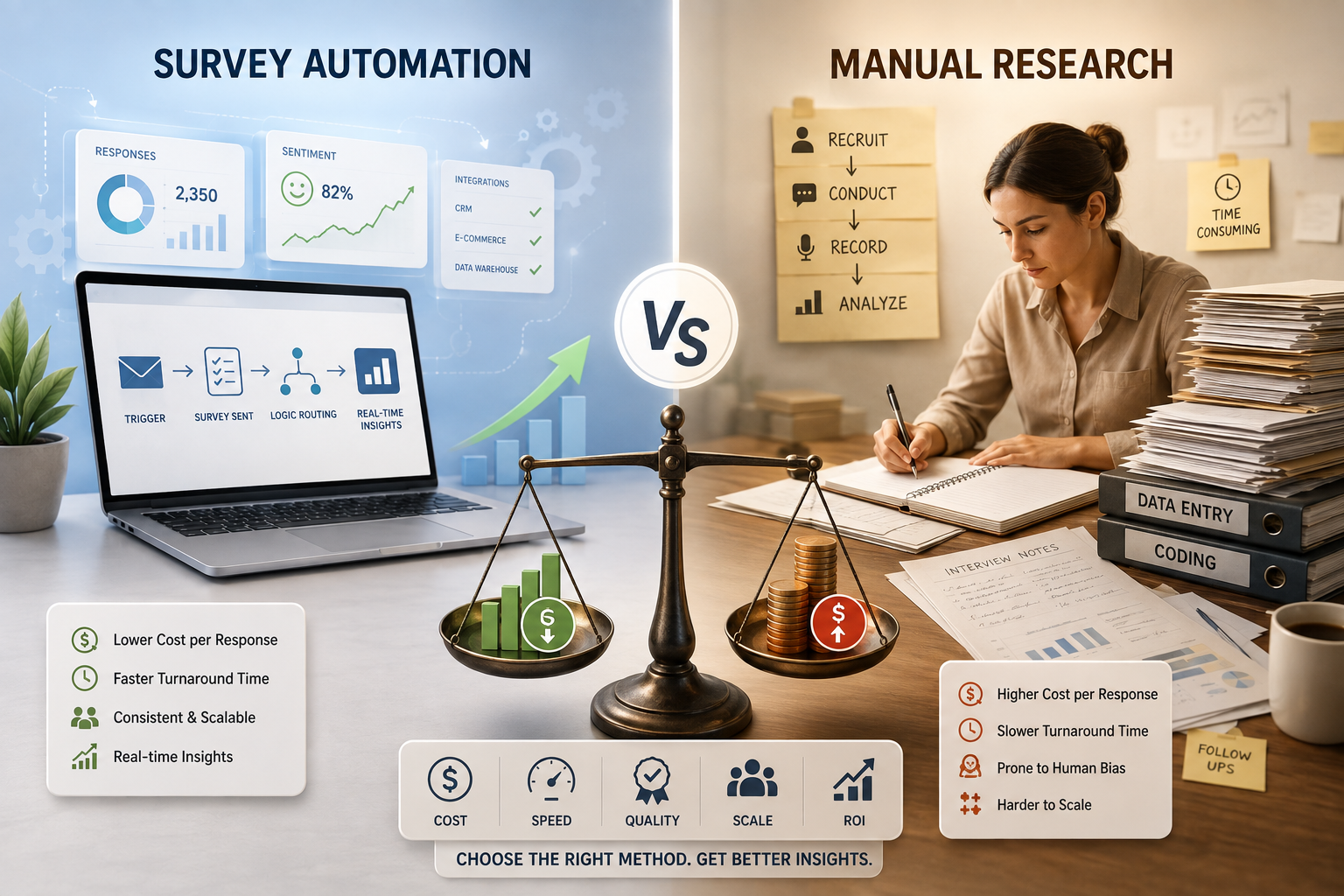
Merkmetryx includes an AI Survey Builder that helps create research questionnaires with built-in quality checks, automatic bias detection, skip logic, and multilingual support. These features improve survey quality before data collection begins.
High-quality feedback provides a better understanding of customer expectations before development starts.
Step 6: Analyze Research Results
Collecting responses is only one part of the process. The next step is converting research into business insights.
Merkmetryx automatically organizes research data, performs data validation, analyzes open-ended responses using Natural Language Processing, and generates interactive dashboards with presentation-ready reports. This reduces manual effort and helps teams review findings more efficiently.
Businesses can quickly identify:
- Customer preferences
- Feature priorities
- Purchase drivers
- Market trends
- Potential risks
These insights support more confident product decisions.
Step 7: Refine the Product Before Launch
Research often reveals opportunities to improve a product before it reaches the market.
Customer feedback may suggest:
- New feature priorities
- Simpler user experience
- Better pricing
- Improved positioning
- Clearer messaging
Making changes before launch is generally faster and less expensive than redesigning a product after customers reject it.
Validation should continue throughout product development instead of ending after one survey.
Why Merkmetryx Simplifies Idea Validation
Idea validation usually requires multiple tools for surveys, competitor analysis, reporting, and customer feedback.
Merkmetryx brings these activities together on one platform.
Key capabilities include:
- AI Survey Builder
- Global consumer panel with more than 250 million verified respondents
- Market demand validation
- Competitive intelligence
- Sentiment analysis
- Interactive dashboards
- Presentation-ready reports
- Predictive analytics
- Natural language data queries
These features help businesses move from research to action with greater confidence and reduced manual effort.
Conclusion
Building a successful product starts long before development begins. The strongest ideas are supported by customer evidence, market demand, and competitive analysis.
Following a structured validation process helps reduce uncertainty, improve product planning, and increase the chances of a successful launch.
Merkmetryx provides the research tools businesses need to validate ideas, benchmark competitors, collect customer feedback, and convert research into actionable insights. With faster analysis and reliable data, founders and business teams can move from idea to execution with greater confidence.